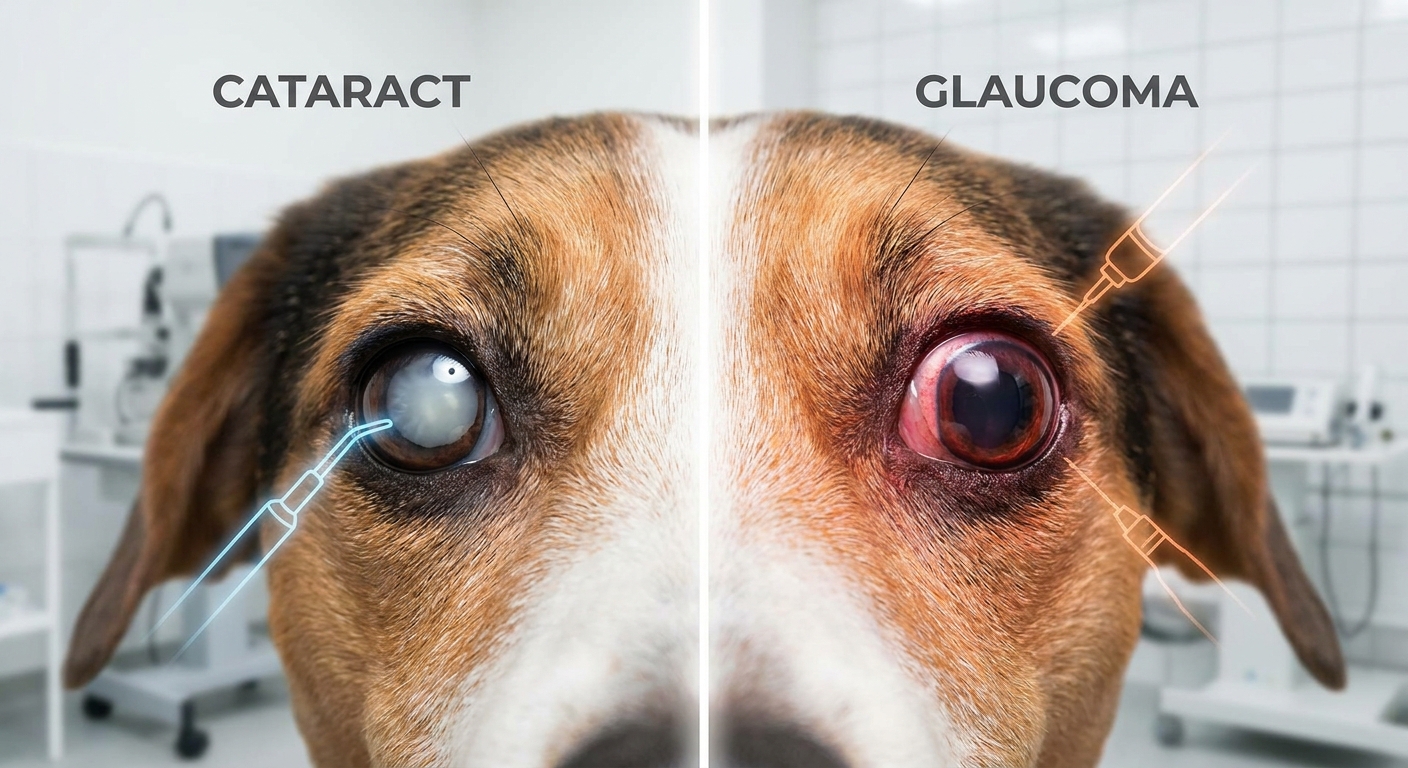
Pets bring immeasurable joy, and ensuring their quality of life includes preserving their vision. Two common, yet distinctly different, ocular conditions affecting our beloved companions are cataracts and glaucoma. While both can lead to blindness, they have unique causes, progressions, and treatment strategies. Understanding these differences is crucial for pet owners to recognize symptoms early and seek appropriate veterinary care. This article will unravel their complexities, explaining their unique characteristics and delving into advanced surgical options to restore or preserve your pet's precious vision.
Cataracts in Pets: The Cloudy Lens
A cataract is an opacity within the lens of the eye, obstructing light passage and leading to blurred vision or complete blindness. It's like looking through a frosted window.
Causes of Cataracts
Cataracts in pets can arise from various factors:
- Genetic Predisposition: Many breeds (e.g., Boston Terriers, Golden Retrievers, Poodles) are genetically predisposed.
- Diabetes Mellitus: Diabetic cataracts are very common in dogs, often developing rapidly.
- Age-Related (Senile): Older pets can develop cataracts as a natural part of aging, though not all age-related lens changes are true cataracts.
- Trauma or Inflammation: Injury to the eye or chronic inflammation (uveitis) can induce cataract formation.
Recognizing Cataract Symptoms
Early signs can be subtle, but pet owners might notice:
- A cloudy, bluish-white, or grayish appearance within the pupil.
- Reluctance to navigate in dim light or bumping into objects, especially in unfamiliar surroundings.
- Changes in behavior due to vision loss (e.g., anxiety, difficulty finding toys).
Surgical Solutions for Cataracts
For visually significant cataracts, surgery is the only effective treatment to restore vision. The gold standard procedure is phacoemulsification, similar to human cataract surgery. During this procedure, a small incision is made, and an ultrasonic probe is used to emulsify (break up) the cloudy lens into tiny fragments, which are then suctioned out. An artificial intraocular lens (IOL) is typically implanted to restore proper focus. Success rates are high, significantly improving the pet's quality of life. Post-operative care involves a regimen of eye drops and careful monitoring.
Glaucoma in Pets: The Silent Thief of Sight
Glaucoma is a painful and potentially blinding disease characterized by an increase in intraocular pressure (IOP), which damages the optic nerve and retina. It’s often referred to as the “silent thief of sight” because vision loss can be rapid and irreversible if not addressed promptly.
Causes of Glaucoma
Glaucoma is classified into two main types:
- Primary Glaucoma: Inherited and often breed-specific (e.g., Cocker Spaniels, Basset Hounds, Beagles). It occurs due to abnormal fluid drainage structures within the eye.
- Secondary Glaucoma: Develops as a consequence of another eye condition that obstructs fluid outflow, such as severe inflammation (uveitis), advanced cataracts, intraocular tumors, or lens luxation.
Recognizing Glaucoma Symptoms – An Emergency
Glaucoma is an ocular emergency. Symptoms can progress rapidly:
- Pain: Squinting, rubbing the eye, sensitivity to light, withdrawal.
- Red Eye: Bloodshot appearance (conjunctival and episcleral injection).
- Cloudy Cornea: A bluish haze or edema of the clear front surface of the eye.
- Dilated Pupil: The affected pupil may appear larger and unresponsive to light.
- Vision Loss: Often rapid, leading to bumping into objects.
- Enlarged Eyeball (Buphthalmia): In chronic cases, the eye may visibly swell.
Surgical Solutions for Glaucoma
Treatment for glaucoma aims to reduce IOP and preserve vision, often starting with medical management (eye drops). However, surgical intervention is frequently necessary, especially in advanced or unresponsive cases.
- Laser Cyclophotocoagulation: This procedure uses a laser to destroy part of the ciliary body, which produces the fluid within the eye, thereby reducing fluid production and IOP.
- Gonioimplants (Shunt Surgery): Tiny drainage devices (shunts) are implanted to create an alternative pathway for fluid to leave the eye, lowering pressure.
- Enucleation or Intrascleral Prosthesis: For eyes that have lost all vision, are chronically painful, or unresponsive to treatment, removal of the eye (enucleation) or placement of an artificial eye (intrascleral prosthesis) may be recommended to alleviate pain and improve the pet's comfort.
Key Differences: Cataracts vs. Glaucoma
Understanding the fundamental distinctions between these two conditions is paramount:
- Affected Structure: Cataracts affect the eye's lens; glaucoma affects the optic nerve due to high intraocular pressure.
- Pain: Glaucoma is almost always painful, often severely. Cataracts typically are not painful unless they lead to secondary complications like uveitis.
- Progression: Cataract progression can vary from slow to rapid. Glaucoma often progresses very rapidly, demanding immediate intervention.
- Reversibility of Vision Loss: Vision lost due to cataracts can often be restored through surgery. Vision lost due to glaucoma, especially optic nerve damage, is generally irreversible. The goal with glaucoma surgery is to preserve remaining vision and alleviate pain.
The Importance of Early Diagnosis and Specialized Care
Both cataracts and glaucoma underscore the critical importance of regular veterinary check-ups and prompt attention to any changes in your pet's eyes or behavior. If you suspect your pet is experiencing vision problems or eye discomfort, seeking a veterinary ophthalmologist immediately is vital. These specialists possess the diagnostic tools (e.g., tonometry for IOP, slit-lamp biomicroscopy for lens evaluation) and surgical expertise to accurately diagnose and manage these complex conditions, offering the best chance for a positive outcome.
Conclusion
While both cataracts and glaucoma can threaten your pet's vision, they are distinct diseases requiring different approaches. Cataracts, an opacity of the lens, are often treatable with vision-restoring phacoemulsification. Glaucoma, characterized by high intraocular pressure and optic nerve damage, is an ocular emergency requiring urgent intervention to preserve remaining vision and manage pain. As dedicated pet owners, recognizing the subtle signs and understanding these differences empowers us to act quickly, securing the specialized care needed to protect our cherished companions' sight and ensure their continued well-being.